

Recognising the ‘glass ceiling’ for many scientists, particularly women, exists - and the effect is to prevent many first class scientists from making valuable contributions, the Microbiology Society looked for change.
The Microbiology Society is a membership charity for scientists interested in microbes, their effects and their practical uses. It is one of the largest microbiology societies in Europe with a worldwide membership based in universities, industry, hospitals, research institutes and schools. Members have a unique depth and breadth of knowledge about the discipline
With a Grant - called Unlocking Potential, the Society committed to offering coaching as part of a package of support. The partnership with UK ICF was designed to provide the coaching to help overcome barriers. As part of the deal, we have provided a study into the impact of the coaching.
As members of ICF we have a set of core competencies that form the basis of our work. In the following two examples we can see how the first set of competencies, Setting the Foundation, are illustrated through the coaching relationship.
UK ICF understand the importance of having credible research to demonstrate the power of coaching and have invested in evaluation of results. The following information is taken from in depth interviews conducted by Dr Helen Smith from Enhancing Leadership and Manchester Metropolitan University
Here we can see how our coaches demonstrate ethical practice and embody a coaching mindset.
Coaching is not only a transformative experience for the coachee but also a journey of self-discovery and growth for the coach. This continuous reflection and challenge is an important part of preparation for setting the Foundation.
As coaches engage with clients across various sectors and career stages, they often glean valuable insights that resonate with their own practice and personal development. Let's explore some compelling reflections from coaches who have been inspired and enlightened by their experiences through the collaborative partnership, adding richness of experience to the coaches who engaged.
One of the coaches reflected on the expansive nature of career coaching and the potential for future growth. The coach contemplated the broader question of where the client would want to go in the future, prompting a revaluation of their own coaching trajectory too. The insight reinforced the idea that coaches need not be pigeonholed into specific niches.
Indeed, a distinct benefit to our members of collaborative partnerships such as these is to open up opportunities to work with a diverse range of clients. For one coach, it reaffirmed the enthusiasm for working with scientists, reconnecting with the energy and passion that fuelled their coaching journey from the beginning.
Collaborative partnerships provide vast opportunities to expand coaching practice, particularly for organisations like the Microbiology Society who recognise the value of coaching. The realisation that nearly every group of scientists could benefit from coaching underscores the potential for impactful work in diverse settings. This insight encourages the coach to consider the wider scope of their influence and the transformative potential of coaching across various sectors they previously had not considered.
In our reflections, we noticed the contrast between coaching different groups of clients – from undergraduates to executive-level leaders. The coach notes the common thread of fear and anxiety around career transitions, regardless of career stage. The realisation that executive leaders, with decades of experience, also grapple with fear around new beginnings offers a reassuring perspective. The coach finds excitement in helping clients see career transitions as opportunities for exploration and personal growth. This insight becomes a powerful tool in addressing the pervasive fear and anxiety experienced by many coaching clients.
A common thread woven through these reflections is the belief in the potential of every individual, regardless of their career stage or background. Coaches are inspired by the diverse challenges faced by their clients, reaffirming the importance of offering unbridled support, presenting challenging discussions when necessary, and giving clients permission to explore new possibilities. The insights gained from working with different clients become the catalyst for personal and professional growth, shaping the way coaches approach their practice and opening doors to new and exciting opportunities.
In the dynamic landscape of coaching, these reflections serve as a reminder that every coaching interaction is a reciprocal journey, offering lessons, inspiration, and growth for both the coach and the coachee. We found that the tools of setting an ethical foundation with an enquiring mindset are fundamental in facilitating trust supporting change.


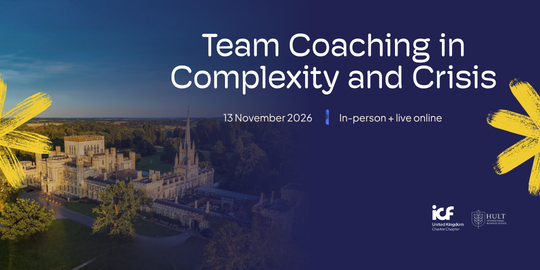
Team Coaching in Complexity and Crisis brings leading thinkers and practitioners together
READ MORE
The reflections shared through this initiative will help share future supervision provision.
READ MORE
Over two days in early November, as the co-president of UK ICF Chapter, I had the privilege of attending Thinkers50 Summit
READ MORE
It's about noticing what constrains and what expands... shedding what confines, and cultivating what is both grounded and spacious
READ MORE
Getting together as ICF chapter leaders is important for building cross-border coaching communities and strengthening our chapter networks across geographies
READ MORE
A day alive with fresh thinking, learning, and connection.
READ MORE
The Coach's Summer Playbook: Grow While You Recharge
READ MORE
The conversation around AI in coaching is heating up.
READ MORE
Uncertainty has a way of stretching us... requiring us to ideate, iterate and adapt at pace, and develop resilience and innovation along the way...
READ MORE
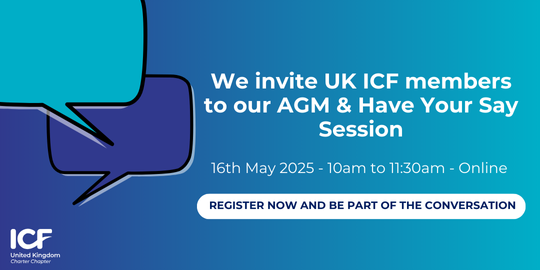
Join Us for the UK ICF Annual General Meeting - Have Your Say
READ MORE
Change is an inevitable part of life, and every transition brings its own set of challenges and opportunities.
READ MORE
As a member of both ICF Global and the UK ICF Chapter, you have direct access to a diverse range of resources.
READ MORE
Reflections from ICF CIO Connection Day 2025
READ MORE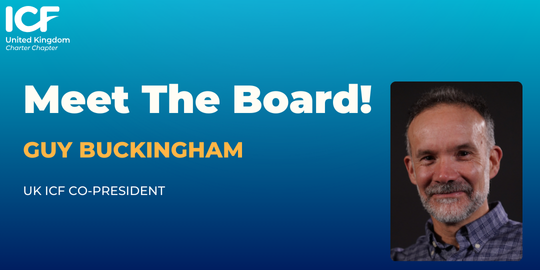
Meet Guy Buckingham, the UK ICF's newly appointed Co-President!
READ MORE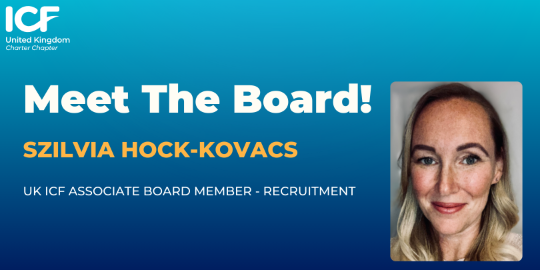
Meet Szilvia Hock-Kovacs, our Associate Board Member for Recruitment!We are excited to introduce our next member this week, Szilvia, who has joined our board as a volunteer focusing on recruitment! H...
READ MORE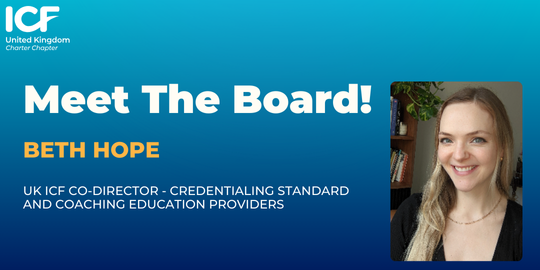
Get to know more about Beth Hope, UK ICF Co-Director for Credentialing Standard and Coaching Education Providers
READ MORE
Coaching at the Heart of Transformation: Navigating Change, Empowering Growth, Shaping the Future
READ MORE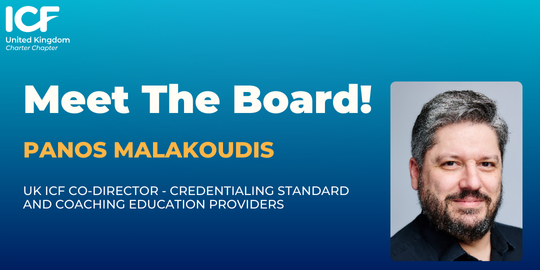
Get to know more about Panos Malakoudis, UK ICF Co-Director for Credentialing Standard and Coaching Education Providers
READ MORE
Coaching, Community, and Care: Supporting Coaches to Make a Difference
READ MORE
Magazine: Wellbeing and self-care for coaches: A summer of rest and self-renewal
READ MORE
Magazine: Beyond ‘walking and talking’ - Coaching in Relationship with Nature
READ MORE
Magazine: Using the Spring as a Springboard to Wellness
READ MORE
Magazine: Quick Tips To Look After Yourself As A Coach
READ MORE
Magazine: Is the Future of Coaching Visual?
READ MORE
Magazine: Become an RSA Fellow & benefit from a range of opportunities as a coach
READ MORE
Magazine: State of Coaching in Organisations
READ MORE
Magazine: How Much Marketing Do You Need to Do?
READ MORE
Magazine: Coaching then and now – a look back over 21 years
READ MORE
Magazine: Creating a new world - 7 key strategies to generate sustainable and long-lasting change
READ MORE
Magazine: Is it time to be meaningfully more human in the age of AI?
READ MORE


Living with uncertainty is a theme that comes up again and again
READ MORE


