


When I started out, people didn’t know what coaching was – they used to think I had something to do with buses. In fact, if you searched for a coach, you’d get listings for bus and coach transport companies. In 2007 The ICF Global Study believed there to be around 30,000 to 50,000 coaches worldwide, compared with the 2023 figures of 109,200 coaches worldwide.
It’s hard to believe how much coaching has changed in the past decades. For most people, the changes have been subtly non-detectable, as the benefits of coaching have continued to be positive and well-documented, even if the focus and delivery of coaching have evolved.
When I reflect on my coaching journey back in March 2002 with The Coaches Training Institute (CTI), I notice that the topics of conversation in coaching have gone much deeper and more introspective. Back then, clients came with personal development, life issues, or a specific work focus, with hardly anyone asking for well-being support. Compare that today, when clients present their needs using terminology such as imposter syndrome, trauma, triggers, or explaining their neurodiverse needs within minutes of meeting.
Back in 2002, I felt confident around the boundaries of who to coach, and when to refer a client to a therapist or other support provider. However, today, I believe the line between coach and counselor has shifted, with today’s coach having to be more informed, with a more rounded training portfolio of skills that support the complex needs many of our clients present to us.
CPD has been a constant in my coaching journey, and I’d seek out generalist training that I felt complimented my previous coaching training. However today, and especially since Covid, my training focus has become more client needs-based and, at times, niche-specific. Being part of the ICF community has allowed me to be more future-focused on my skills development.
Looking back, how I marketed myself has radically changed over the past 21 years. Back then, much of my time was spent educating what coaching was and was not, which I did by doing sample sessions or running free live events, often in local libraries. There was no real social media, so promotion was by website, word of mouth, notice boards, and internal and external directories. Today’s coach must be digitally smart, video-ready, snap-chat happy, and be willing to be visible in multiple ways. With more coaches to choose from, standing out from the crowd has become ever more important.
Thinking back to who I was as a coach in my early 30s, full of belief and conviction for this new industry I am pleasantly surprised that my feelings have hardly changed. I am as passionate about the benefits of coaching as before, with even more anecdotal evidence to sway any naysayers. But more importantly, I’ve witnessed an industry that, like me, has matured to be a professional business to be proud of.
Leadership & Mental Fitness Coach


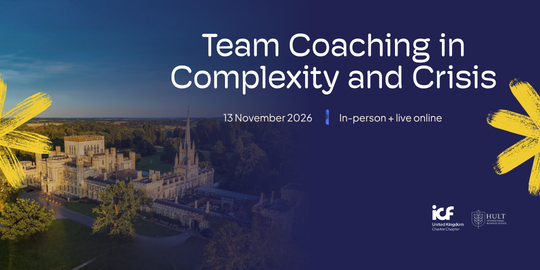
Team Coaching in Complexity and Crisis brings leading thinkers and practitioners together
READ MORE
The reflections shared through this initiative will help share future supervision provision.
READ MORE

Over two days in early November, as the co-president of UK ICF Chapter, I had the privilege of attending Thinkers50 Summit
READ MORE
It's about noticing what constrains and what expands... shedding what confines, and cultivating what is both grounded and spacious
READ MORE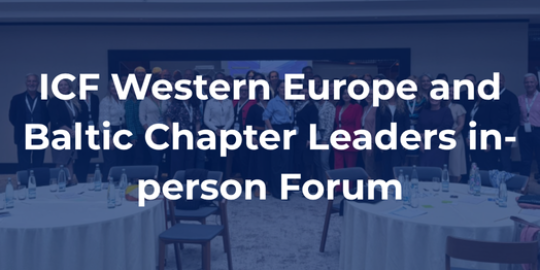
Getting together as ICF chapter leaders is important for building cross-border coaching communities and strengthening our chapter networks across geographies
READ MORE
A day alive with fresh thinking, learning, and connection.
READ MORE
The Coach's Summer Playbook: Grow While You Recharge
READ MORE
The conversation around AI in coaching is heating up.
READ MORE
Uncertainty has a way of stretching us... requiring us to ideate, iterate and adapt at pace, and develop resilience and innovation along the way...
READ MORE
Join Us for the UK ICF Annual General Meeting - Have Your Say
READ MORE
Change is an inevitable part of life, and every transition brings its own set of challenges and opportunities.
READ MORE
As a member of both ICF Global and the UK ICF Chapter, you have direct access to a diverse range of resources.
READ MORE
Reflections from ICF CIO Connection Day 2025
READ MORE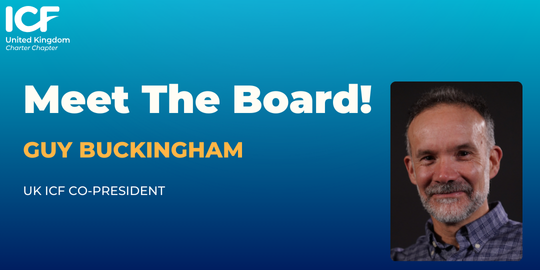
Meet Guy Buckingham, the UK ICF's newly appointed Co-President!
READ MORE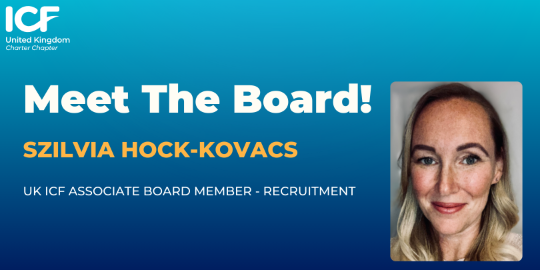
Meet Szilvia Hock-Kovacs, our Associate Board Member for Recruitment!We are excited to introduce our next member this week, Szilvia, who has joined our board as a volunteer focusing on recruitment! H...
READ MORE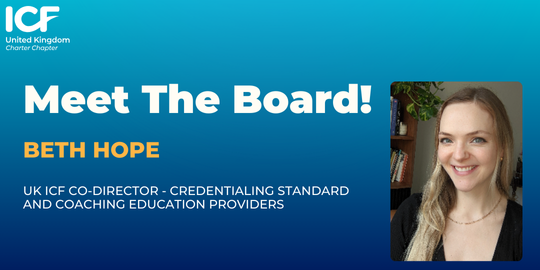
Get to know more about Beth Hope, UK ICF Co-Director for Credentialing Standard and Coaching Education Providers
READ MORE
Coaching at the Heart of Transformation: Navigating Change, Empowering Growth, Shaping the Future
READ MORE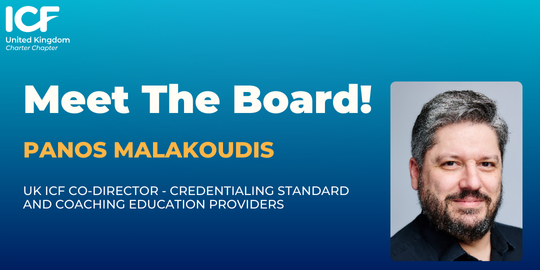
Get to know more about Panos Malakoudis, UK ICF Co-Director for Credentialing Standard and Coaching Education Providers
READ MORE
Coaching, Community, and Care: Supporting Coaches to Make a Difference
READ MORE
Magazine: Wellbeing and self-care for coaches: A summer of rest and self-renewal
READ MORE
Magazine: Beyond ‘walking and talking’ - Coaching in Relationship with Nature
READ MORE
UK ICF Collaborative Partnership with Scientists from the Microbiology Society
READ MORE
Magazine: Using the Spring as a Springboard to Wellness
READ MORE
Magazine: Quick Tips To Look After Yourself As A Coach
READ MORE
Magazine: Is the Future of Coaching Visual?
READ MORE
Magazine: Become an RSA Fellow & benefit from a range of opportunities as a coach
READ MORE
Magazine: State of Coaching in Organisations
READ MORE
Magazine: How Much Marketing Do You Need to Do?
READ MORE
Magazine: Creating a new world - 7 key strategies to generate sustainable and long-lasting change
READ MORE
Magazine: Is it time to be meaningfully more human in the age of AI?
READ MORE


Living with uncertainty is a theme that comes up again and again
READ MORE


