
- Coach Profile
- MCC
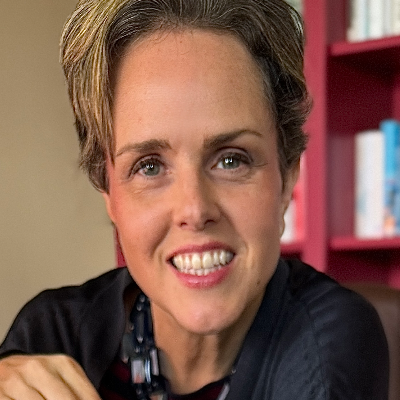
Suzanne Doyle-Morris
Dr. Suzanne Doyle-Morris, ICF MCCC and Cambridge PhD, has focused for 20 years on the under-representation of women in STEM — as a coach, consultant, researcher, and author. 80% of clients secure promotions within 12 months.
For more than 20 years, Dr. Suzanne Doyle-Morris has worked on a single problem: the structural under-representation of women at senior levels in STEM and professional services — and what can actually be done about it.
Her work spans three interconnected areas.
1. Individual coaching. She holds the ICF Master Certified Coach credential — awarded to fewer than 3% of coaches worldwide. Her coaching practice focuses exclusively on senior women in STEM: Directors, VPs, and C-suite leaders in technology, engineering, financial services, pharma, energy and defence. Over 500 women have worked with her individually. 80% have secured promotions or significant career advancement within 12 months.
2. Organisational consultancy. Through InclusIQ, her consultancy practice, she has worked directly with the boards and senior leadership teams of major UK and international organisations to create structural change.
Engagements have included a global financial services firm of over 50,000 employees, where a mentoring programme she designed and facilitated resulted in nearly half of participants being promoted during the programme. Two Executive Committee members subsequently launched their own independent programmes on the same model — evidence that the work multiplied beyond her direct involvement.
At a global law firm, her recommendations contributed to female board representation rising to 38% and the partnership nominations committee reaching 50%. The firm moved from having significant gender balance problems to winning sector awards within three years. New partner promotions among women nearly doubled.
At a UK aviation organisation, an executive coaching programme she implemented achieved a 60% promotion rate within eight months and was doubled in scale due to its rapid success.
Her most substantial organisational engagement was with a leading Scottish institution with regulatory responsibilities, an internationally recognised standing, and a significant public profile. The organisation was navigating long-standing cultural challenges including suspected misogyny, mental health concerns, and a reputation that was deterring the next generation of talent from under-represented backgrounds, despite that group now representing the majority of those qualifying in the field.
She conducted over 120 individual and group interviews across the full range of stakeholders: board members, senior and junior members, staff, clients, and external stakeholders including vocal critics. Working across a group that ranged from hostile to cautiously optimistic, she used her coaching skills to draw out candid perspectives. Interviewees frequently remarked they had shared more than they expected to.
The resulting report was described by the commissioning leadership as a departure from industry norms. It was deemed engaging rather than defensive, and grounded in the words of those inside the institution. The response was immediate. Volunteers came forward with what was described as unprecedented enthusiasm to form task forces covering the key recommendations, and began implementing changes without delay. A new full time hire was made to oversee continued implementation of her recommendations.
The significance of this engagement lies not only in its scale and rigour. It demonstrates that entrenched institutional cultures in organisations with strong traditions, regulatory duties, and vocal external critics can be moved. And that the method matters: independent, evidence-based, and built on the trust of those whose voices had not previously been recognised or valued.
3. Research and published work. Her PhD from the University of Cambridge examined the experiences of women in male-dominated professional fields. That research informed three published books: ‘Beyond the Boys’ Club: Achieving Success as a Woman working in a Male-Dominated Field’ (2009), ‘Female Breadwinners: How they Make Relationships Work and Why they are the Future of the Modern Workforce’ (2011), and ‘The Con Job: Getting Ahead for Competence in a World Obsessed with Confidence’ (2020) Her clients, both as individuals and as organisations, felt she was naming something women in STEM were experiencing but had not seen clearly articulated. She has spoken to thousands of professionals across the UK and internationally as a keynote speaker and trainer.
The throughline across 20 years is consistent: the problem is not the women. The problem is the structures, cultures, and unexamined assumptions that continue to limit them. Her work — at individual, organisational, and societal level — has been directed at changing all three.
Website: suzannedoylemorris.com
Email: suzanne@doylemorris.com

Choosing the right coach matters
Why choose an ICF accredited coach
Every coach in our UK Coach Directory holds an ICF credential, demonstrating they have completed coach-specific education, met internationally recognised coaching standards and are committed to the ICF Code of Ethics and ongoing professional development.
With an ICF credentialed coach, you can choose with confidence.